
Quick Answer: Structural glass staircase railings use thick tempered or laminated glass panels as the primary railing infill or guardrail system on residential staircases and mezzanine levels. In upscale Houston homes, they create a visually open, architecturally refined stair experience that conventional balusters and cable systems cannot match — but they require precise engineering, correct glass specification, and professional installation to meet building code and perform safely over time.
Structural Glass Staircase Railings for Upscale Houston Homes
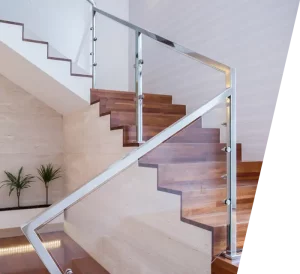 The staircase in an upscale Houston home is architecture, not just circulation. In two-story residences with open great rooms, double-height entries, or mezzanine levels, the stair railing system is among the most visually prominent interior elements — the element that photographs from every angle and that defines the spatial character of the vertical connection between floors. Structural glass staircase railings have become the preferred specification in Houston’s luxury residential market precisely because they achieve something no other railing system can: they make the stair disappear visually while maintaining the code-required guardrail that makes it safe.
The result — a floating stair where treads appear to rise without visual interruption, or a mezzanine edge where the view to the great room below is completely unobstructed — is an architectural statement that traditional balusters, cable systems, and rod railings cannot replicate. But structural glass railing is also among the most technically demanding residential glass applications. The engineering requirements are significant, the installation tolerances are tight, and the consequences of an underspecified or improperly installed system are both aesthetic and structural.
This guide covers everything Houston homeowners and remodeling contractors need to know before specifying and installing structural glass staircase railings in an upscale residential project.
Why This Matters: What Structural Glass Railings Actually Change in a Houston Home
- Visual openness across the full stair run. Conventional balusters create a vertical rhythm that interrupts the sightline from the stair to the spaces beyond. Structural glass eliminates both balusters and cable lines — the railing is present as a safety element but essentially invisible as a visual element, allowing the stair treads, the flooring below, and the architecture beyond to read without interruption.
- Natural light preservation in two-story volumes. In Houston homes with two-story great rooms, a glass railing system allows natural light from upper-level windows to pass unimpeded into the lower level. A solid or heavily obstructed railing system creates a shadow line that glass eliminates entirely.
- Design consistency with other high-end glass elements. In a home that includes frameless glass shower enclosures, floor-to-ceiling windows, or glass wall systems, a conventional baluster railing reads as a specification inconsistency. Structural glass railings complete the architectural language of a home where glass is used as a primary design material.
- Appraisal and resale impact in Houston’s luxury market. Among Houston real estate agents and appraisers serving the luxury segment, structural glass railings are recognized as a quality differentiator — a feature that supports premium positioning and is specifically called out in high-end listing descriptions.
Types of Structural Glass Railing Systems for Houston Residential Staircases
Base-Shoe Channel Systems
The base-shoe channel system is the most common structural glass railing configuration in luxury Houston residential applications. A stainless steel, aluminum, or steel channel is anchored to the stair structure at the base of the railing run, and glass panels are set into the channel and secured with structural wet glaze or dry set rubber blocks. When recessed, the glass appears to rise directly from the stair surface — an effect that is visually striking and technically demanding to execute correctly.
Point-Fixed Systems
Point-fixed systems attach glass panels directly to the stair structure using individual hardware fittings — spigots or standoffs — at intervals along the panel. The hardware is visible as a design element and must be specified in a finish that integrates with the broader interior hardware program. Point-fixed systems impose higher loads on the attachment points and require careful structural verification at each fitting location.
Structural Glass with a Top Rail
In configurations where a graspable top rail is required by code or desired for comfort, a glass panel system with a metal top rail combines the open visual profile of glass infill with the continuous rail that code requires on staircases above a certain rise. The top rail must be mounted to a system that transfers the required lateral load without relying on the glass panels for structural continuity.
Full-Height Glass Guardrails at Mezzanine Edges
At mezzanine levels and open loft edges in Houston two-story residences, a full-height structural glass guardrail — typically 42 to 48 inches tall to meet code requirements — creates a safety boundary that is completely transparent. The structural requirements for mezzanine guardrails are more demanding than for stair railings, as they must resist the lateral loads imposed by a person falling against them at the full guardrail height. Buffalo Glass Co’s residential glass services include structural glass mezzanine guardrail systems specified to Houston building code requirements.
Engineering and Code Requirements: What Houston Homeowners Must Understand
- Glass thickness and type requirements. The IRC requires that glass used as a structural railing panel be tempered glass or laminated glass meeting specific minimum thickness requirements based on panel height and span. The code minimum is the floor, not the target — luxury residential applications warrant specification above the minimum.
- Load requirements. Stair and mezzanine guardrails must resist a concentrated lateral load of 200 pounds applied at any point on the top of the railing and a distributed load of 50 pounds per linear foot. The structural glass panel and its attachment system must be engineered to transfer these loads without exceeding the allowable stress in the glass.
- Permit requirements. Structural glass railing installations in Houston typically require a building permit and may require submission of engineering calculations demonstrating code compliance.
- Handrail requirements. In Houston, staircases with a certain rise require a graspable handrail independent of the guardrail system. A glass guardrail panel does not qualify as a graspable handrail — most structural glass stair railing applications also include a separate top rail element.
Glass Specification for Structural Staircase Railings
- Tempered vs. laminated glass. The professional recommendation for luxury Houston residential stair railing projects is laminated tempered glass — which combines the strength of tempered glass with the hold-together characteristic of laminated glass. If a laminated tempered panel breaks, the PVB interlayer holds the fragments in place rather than allowing the panel to fall onto the stair below.
- Glass thickness for structural railing applications. Structural glass railing panels typically run from 1/2 inch to 3/4 inch in thickness, depending on panel height, span, and load requirements. The specific thickness required is an engineering determination based on the panel geometry and load case.
- Low-iron glass for visual clarity. The edge of a structural glass railing panel is visible from multiple angles. Standard glass with a green edge tint is visible and detracts from the premium appearance of the installation. Buffalo Glass Co’s custom glass fabrication includes low-iron panel production for structural railing applications.
Common Mistakes in Structural Glass Staircase Railing Projects
- Specifying standard glass thickness without an engineering review. Selecting glass thickness based on aesthetic preference or catalog defaults — without a structural review of the actual panel dimensions and load requirements — produces railing systems that may not meet code and require replacement after inspection.
- Ignoring the attachment point structural capacity. The glass panel in a structural railing system is only as strong as its attachment to the stair structure. The stair structure must be evaluated as part of the railing specification — not assumed to be adequate.
- Installing without a permit on a regulated application. Structural glass railings in Houston are a permit-required application. Installing without a permit creates a code violation that must be resolved before the home is sold, refinanced, or insured as a renovated property.
- Using standard tempered glass instead of laminated tempered glass. In an application where a failed panel is above a staircase or open-to-below condition, tempered-only glass that shatters on failure presents a fall risk. Laminated tempered glass eliminates both the fragment risk and the fall-through risk.
- Selecting hardware without verifying the load rating. Hardware specified below the actual load requirement will deform or fail under a railing load test — or under an actual impact event. Hardware selection must be coordinated with the glass specification and structural attachment design.
Professional Glass Installer vs. General Ironwork or Railing Contractor: Why Specialization Matters
| Factor | General Railing / Ironwork Contractor | Professional Structural Glass Installer |
|---|---|---|
| Glass specification knowledge | May specify glass as an infill; not as a structural element | Specifies glass thickness, type, and attachment as an engineered system |
| Engineering coordination | Rarely coordinates with a structural engineer | Provides engineering documentation for permit submission |
| Low-iron glass sourcing | Typically orders standard glass from a general supplier | Custom fabricates low-iron laminated panels to exact field dimensions |
| Load rating verification | Hardware selected by aesthetic; load rating rarely verified | Hardware selected and verified to meet code load requirements |
| Curved stair capability | Limited to straight runs; radius work requires specialty fabrication | Custom radius fabrication available for curved stair geometries |
| Code compliance | Variable; may not be familiar with IRC glass railing provisions | Installation documented and specified to Houston building code requirements |
For remodeling contractors managing upscale Houston renovations that include stair railing replacement or new stair construction, Buffalo Glass Co’s residential construction and remodel glass services include structural glass railing specification, engineering coordination, permit documentation support, and professional installation by crews with direct experience in luxury residential stair applications.
The Installation Process for Structural Glass Staircase Railings
- Structural assessment and design consultation. The glass installer and, where required, a structural engineer assess the stair structure, identify attachment points, confirm load capacity, and develop the railing system design.
- Permit submission. The railing system specification and engineering calculations are submitted as part of the permit package. Permit approval is obtained before any fabrication or installation begins.
- Field measurement. After the stair structure is in final condition — flooring complete, stringer finished, treads installed — precise field measurements are taken for each glass panel.
- Custom panel fabrication. Glass panels are custom fabricated to field dimensions in laminated tempered low-iron glass. Edge polishing, hardware cutouts, and any notching for channel systems are completed during fabrication. Lead times for structural railing glass run three to four weeks.
- Hardware and channel installation. Base-shoe channels or point-fixed hardware are installed and anchored to the stair structure. Level, alignment, and anchor torque are verified at each attachment point before glass arrives on site.
- Glass panel installation and adjustment. Panels are set into the channel or onto point-fixed hardware, secured, and adjusted for alignment across the full railing run. The top rail is installed and connected to the glass system or wall attachment points.
- Inspection and load test. The completed railing system is inspected for alignment, hardware torque, and glass seating. Where required by permit, a load test is performed and documented for the building inspector.
Why Choose Buffalo Glass Co for Structural Glass Staircase Railings in Houston
Structural Glass Expertise Developed Over Decades
Buffalo Glass Co has been executing residential glass installations in Houston since 1956 — including structural applications where glass must perform as an engineered element, not simply as a decorative panel. The company’s technical depth in glass specification for load-bearing applications is the foundation of its structural railing work: the right glass type, the correct thickness, and the appropriate hardware specified together as an engineered system.
Custom Fabrication for Every Stair Geometry
Houston’s upscale residential market includes staircases that are straight, curved, floating, and every combination thereof. Buffalo Glass Co’s custom fabrication capabilities include radius-cut panels for curved stair applications, oversized panels for tall mezzanine guardrail runs, and any glass thickness and type specification appropriate to the structural requirements of the application. Custom glass fabrication is a core Buffalo Glass Co capability — not a special-order exception.
Reliability and Accountability on Luxury Projects
Structural glass railing installation is a sequenced scope — it follows stair completion and precedes final flooring and trim in the immediate stair area. Buffalo Glass Co’s project coordination is built around protecting your renovation schedule: clear documentation of the installation sequence, reliable lead time communication on fabrication, and installation crews that execute the scope without creating downstream issues for the trades working around them.
Serving All of Greater Houston
From Tanglewood and River Oaks to The Woodlands, Sugar Land, and Katy, Buffalo Glass Co serves upscale residential projects across the full Houston metropolitan area. Contact Buffalo Glass Co to schedule a structural assessment and design consultation for your glass staircase railing project.
Frequently Asked Questions
Do structural glass staircase railings require a building permit in Houston?
In most cases, yes. When a structural glass railing system replaces or installs a new guardrail on a staircase or mezzanine level in a Houston residence, the work typically requires a building permit. The permit process requires submission of the railing system specification and, in some cases, engineering calculations demonstrating that the glass and attachment system meet the lateral load requirements of the International Residential Code.
Can structural glass railings be installed on an existing staircase, or only in new construction?
Structural glass railings are installed on existing staircases in renovation projects throughout Houston’s upscale residential market. The key considerations are the structural capacity of the existing stair stringer or landing at the railing attachment points, and whether the existing stair configuration accommodates the base-shoe channel or point-fixed hardware geometry of the glass system. A professional glass installer will assess the existing stair structure during the initial consultation.
What is the difference between a structural glass railing and a framed railing with glass infill panels?
A framed railing with glass infill uses conventional metal posts and a top rail to carry the structural loads of the guardrail system, with glass panels filling the spaces between posts as a non-structural decorative element. A structural glass railing uses the glass panels themselves as the structural guardrail element, with the attachment system transferring loads directly from the glass to the stair structure. Structural glass railings require thicker glass, engineered attachment hardware, and a structural review — but they deliver the completely post-free visual profile that makes glass railing systems architecturally distinctive.
How do structural glass railings hold up over time in Houston’s climate?
Interior structural glass staircase railings are not directly exposed to Houston’s humidity, UV, or temperature extremes, so climate durability is less of a concern than for exterior glass applications. The primary long-term maintenance considerations are hardware anchor torque verification — as the structure experiences seasonal movement — and the glass surface itself, which is maintained with standard glass cleaner. The glass will maintain its structural and visual integrity indefinitely under normal residential use conditions.
What hardware finishes are available for structural glass staircase railings?
Structural glass railing hardware is available in a range of finishes appropriate to luxury residential interior applications: brushed stainless steel, polished stainless, matte black powder coat, oil-rubbed bronze, brushed nickel, and custom PVD finishes that replicate brass, gold, and other decorative metal appearances with superior durability. Hardware finish selection should be coordinated with the interior door hardware, plumbing fixtures, and lighting hardware specification of the home for visual consistency across all metal elements.
Ready to transform your Houston staircase with structural glass railings? Request a consultation from Buffalo Glass Co or call (713) 774-7495 to speak with a residential glass specialist about your project.